
My Best CHI in Over a Decade
It's also my best blog post in a decade, given the last one I wrote was exactly 10 years ago
Posted 20 Apr 2026
I had mostly stopped going to CHI. In fact, before I attended CHI in Honolulu in 2024, my last one was in Seoul in 2015. The conference is too large, the location is too US-centric (50% of the CHI conferences were in the US in the past decade), I am trying to limit my travels both for environmental and for family reasons, and more. But most of all, I did not feel like I belonged there. It was hard to meet new people and I did not find the crowd particularly welcoming. Workshops were closed (compared to e.g., VIS, that has an open-door policy for workshops), which strongly limited the potential for interactions with new folks.
But I had a completely different experience this year, and the experience was so good it motivated me enough to write about it. Even though everything was not perfect.
Let's get this out of the way
Let's get three negative thoughts out of the way, and then we can focus on the positive, hold hands and live happily ever after.
Rooms
Rooms were too small with strict capacity limits, and there were long lines to get in. There is no way I spend time in a line to see presentations at a conference. When we see how expensive conferences like CHI have become, I think this is simply unacceptable. In fact, I did not manage to attend any visualization-focused session besides the one on Physical and Tangible Visualizations — because I came in 40 minutes earlier.
Paper Presentations
I don't go to conferences to sit through presentations. Too often, unfortunately, the quality of the presentations is not good, speakers read their presenter notes (or on their phones!), do not seem prepared, and I get bored to death. Instead of sitting there and processing emails, I prefer to get out and chat with people. Having the afternoons reserved for more interactive sessions is to me an excellent change. Many will complain about the new format, but I think for one, that this is a much-needed improvement. I would even push for more change in that same direction (less presenting, more discussing).
AI
That's honestly the one that bothers me the most: has CHI become an AI conference? Honestly, opening the program on the first day was just depressing. The first 7 sessions listed start with AI. That's an effect of alphabetical ordering, but still, every day was more of the same, with AI sessions, AI workshops, AI panels, and AI meetups. Even the non-AI-focuses sessions had papers with AI. A wild guess would be that more than 50% of the content was about AI. And AI sessions were also in large rooms and very well attended. So I guess I'm part of a minority when I push back against this, and I just have to bide my time and hope the next AI winter comes sooner rather than later. In the meantime, I'll just keep bitching.
Now, those three negative aspects of the conference did not affect my experience much after all. There are enough parallel sessions that I did not have to sit through any AI session, and when sessions were too full, I would just go outside and either find a friendly face or start chatting with someone I had never met before.
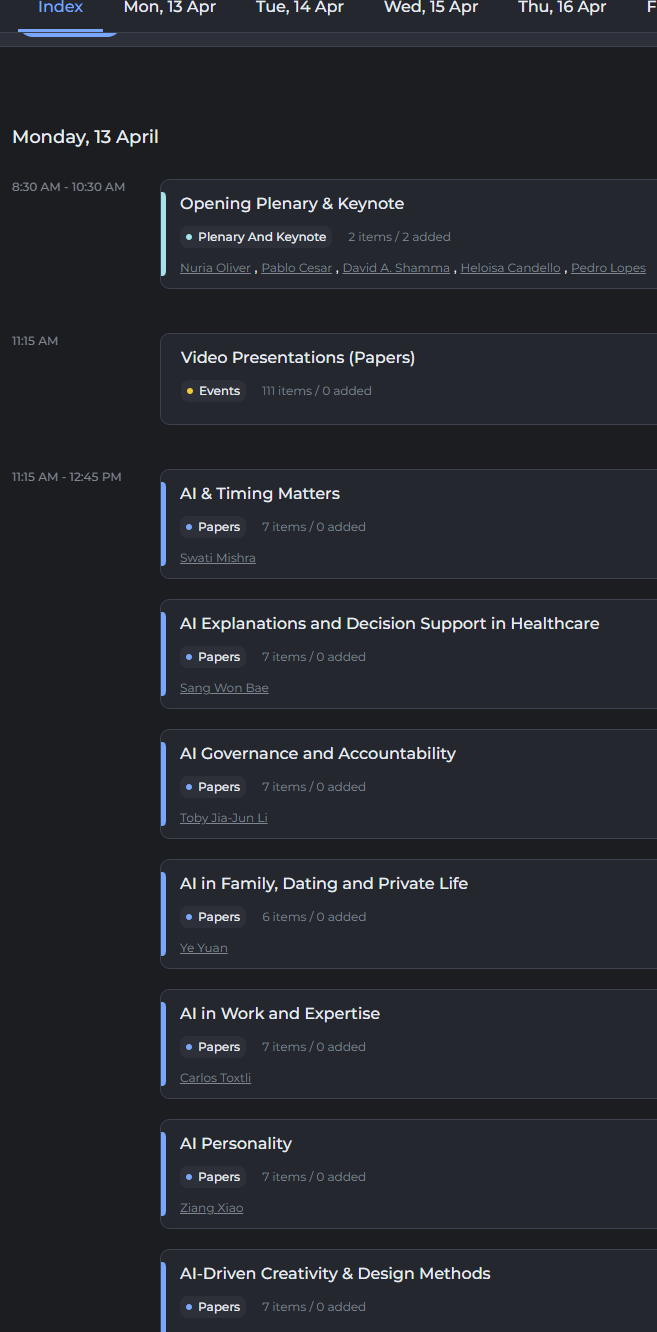
What you see when you open the program app on the first day at CHI
What Made This CHI Different
What made it such a positive experience?
I've tried to identify what specifically made this experience such a positive one. At first, I just felt I had a good time and enjoyed my week overall. But then the more I thought about it, the more I realized all stars were aligned for me to be able to enjoy the conference this much.
The Bike
The most tangible factor: I came with my old bike. Barcelona is built for cyclists and pedestrians, and I used it for everything — getting to the conference, riding to my hotel, finding places to run, going to parties. At first, the city's traffic feels like treacherous chaos, with red lights and speed limits mostly ignored. But I came to appreciate how well-organized that chaos actually is. People break the rules, but they do so with awareness — eye contact, micro-gestures, a kind of collective negotiation happening in real time. Compared to places where everyone follows the rules but does not actually communicate, there was something more courteous about it, less individualistic, more collective. Fun fact, people do all this without any kind of technology or AI assistant, and that's insightful on its own.
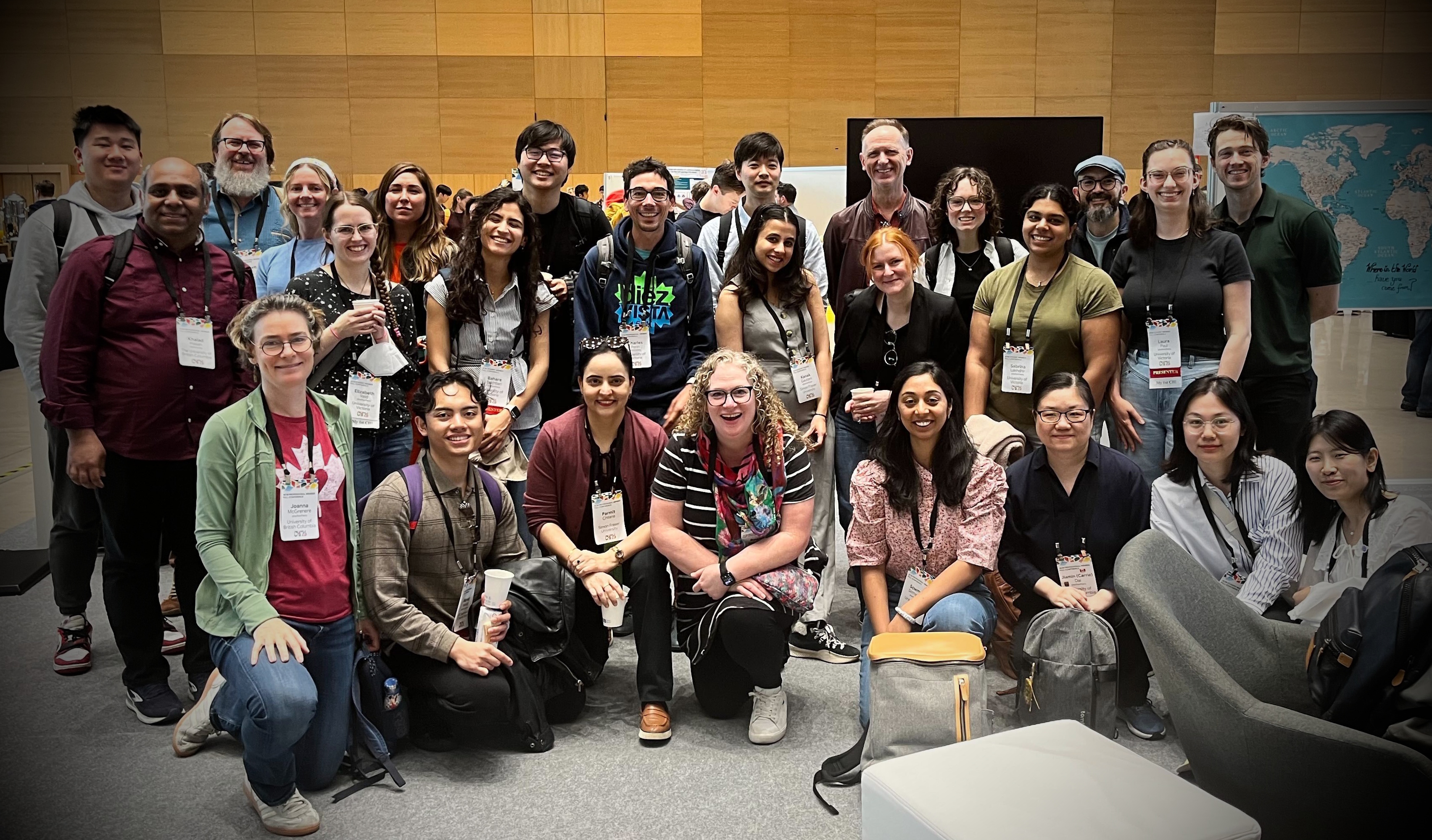
The Salish SIGCHI Chapter at CHI | Wearing my maple leaf-themed Diez Vista hoodie for the occasion
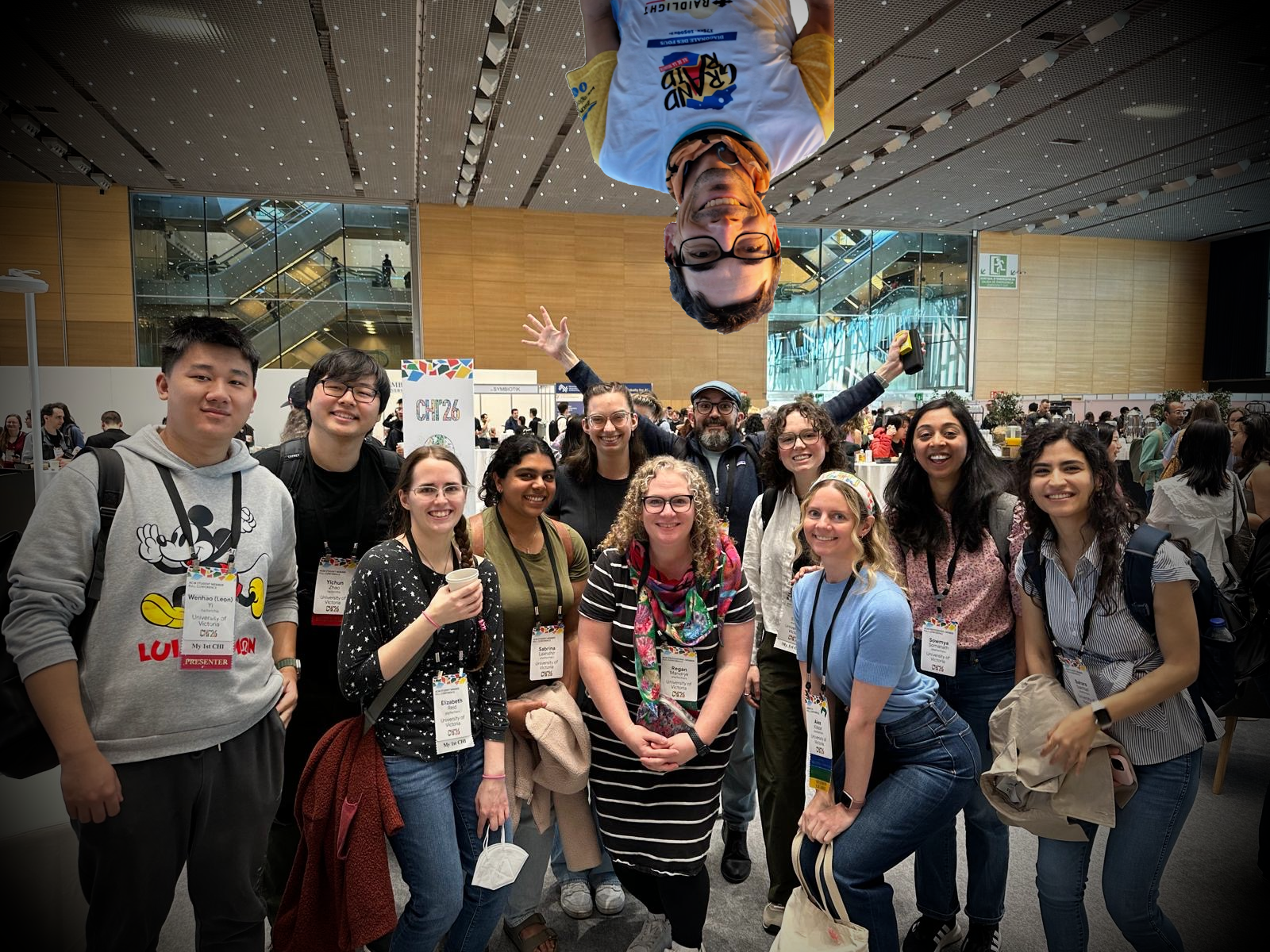
I missed the VIXI Lab picture so I added myself
The People
Then there's the city and the (Latin) people, who eat tapas all day, stay out late, scream at each other, play soccer on the streets, live for FC Barcelona, and smoke (a lot!) with no shame. I had time with old friends and met new ones. Barcelona also meant CHI felt very international. The proportion of non-US attendees was refreshingly high, and it showed — in the conversations and the general atmosphere. There were some mandatory 'everything-is-amazing' moments in the opening and closing plenaries, but it did not feel like Disneyworld.
The Lab
Our lab had a strong presence. VIXI co-authored seven full papers, co-organized two workshops, and had a whole range of other things going on. We were five faculty and seven students, which I think is the largest VIXI contingent at CHI to date. We also took the first group picture for the Salish SIGCHI Chapter at CHI, in addition to the traditional Canada HCI group picture. I missed the VIXI group picture but no one can tell thanks to my amazing non-AI-powered image editing skills.
The Frictionless
The weather helped too. Perfect all week, I could wear my usual outfit (shorts and t-shirt). And being based in Bordeaux for my sabbatical, I just drove there — no jet lag, no long-haul flight, no travel day lost. My family was also there, which usually adds stress — the awareness that chaos is unfolding at home — but instead it meant I could see them every day. They were off exploring museums, mosaics, and street art.
The Serendipity
The conference center helped too. The outdoor space was great for accidental, unscheduled conversations that are actually the point of going to a conference. This gave a new meaning to being a conference smoker — I found out I'm not alone, and as it turns out, stepping outside for a smoke is one of the more reliable ways to meet people you'd never cross paths with otherwise. Some of my best conversations of the week happened on those curvy wooden benches out front, with people I'd never have met in a session room.
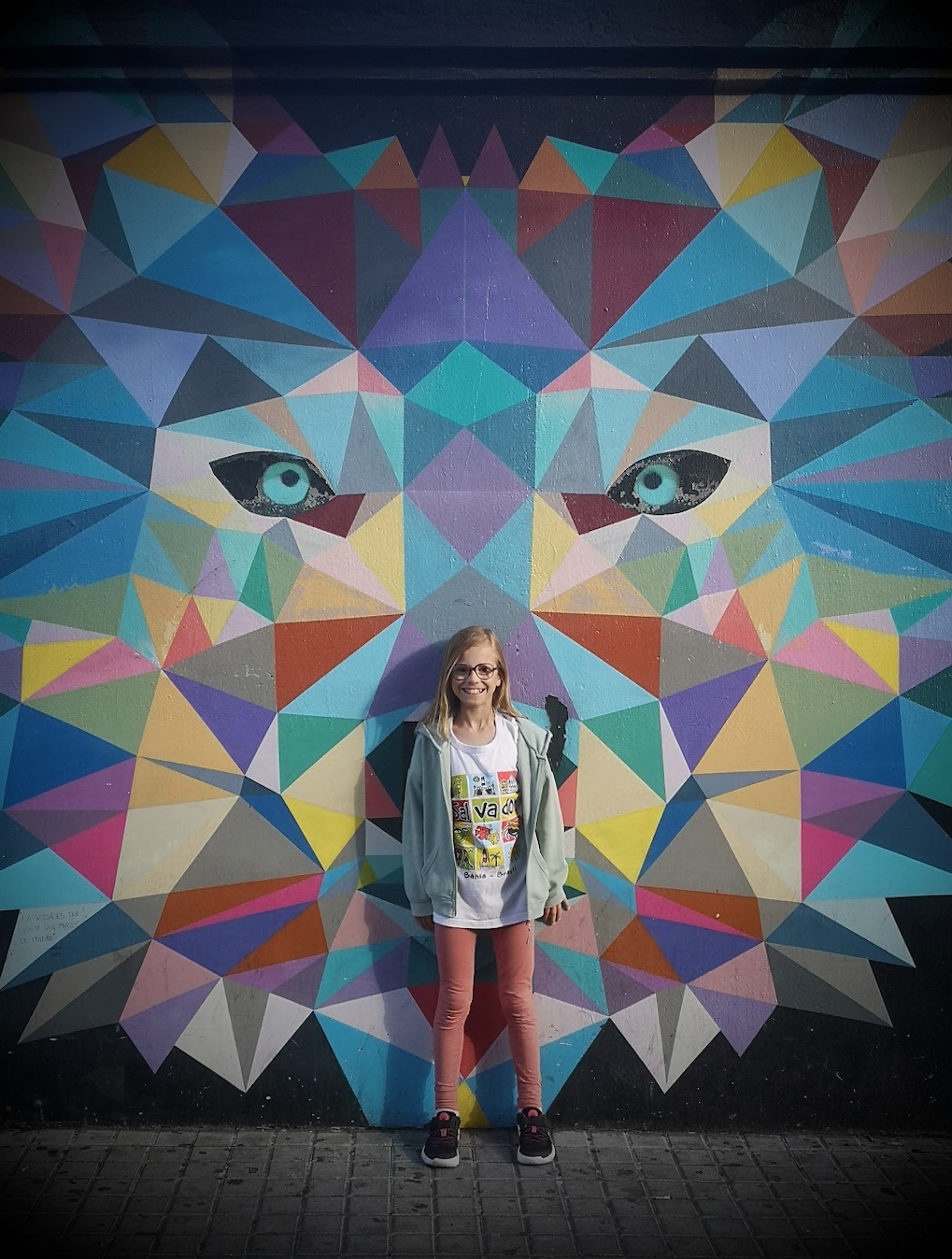
Blending in
The Peace of mind
Finally — and I think this mattered more than I initially gave it credit for — I'm on sabbatical this year. Not having teaching and administrative responsibilities humming in the background made an enormous difference. It's something worth thinking about for future conferences: even just switching off email for the week might approximate that effect (or better, finally switch to email clients that are always-off by default). It helped that I was also unusually unburdened for once — no paper presentations, no committee meetings, not too many scheduled meetings or dinners. Just the right amount of work. Not too little to be a tourist, and not too much for it to become a burden.
The Conference Itself (Finally)
Monday
The conference opened with a keynote by Pep Gatell from La Fura dels Baus. Some found it too high-level, others felt Pep wasn't the strongest speaker. I enjoyed all of it. The highlight for me was his answer to a question about increasing authoritarianism — he mentioned, and I'm paraphrasing from memory, that even at CHI there were things he had not been allowed to present during his keynote. I think that says a lot.
Monday evening was the French party, held in a nice location. Unfortunately, it had limited capacity and required an invitation — I got one (thanks Samuel!) — but I faced the awkward situation of arriving with groups where only half the people had invites. I don't love that model. VIS parties tend to be open to everyone with limited drink tickets, and I think that's the better approach. That aside, it was great to reconnect with the French HCI community and see people I hadn't seen in over a decade.
Tuesday
I attended the Accessibility in Everyday Life session, which included Yichun's paper on accessibility in mixed-visual-ability work teams. The standout for me was Movement as Medium, a project documenting a years-long collaboration with people with motor, sensory, and communication disabilities, aimed at making creative practices genuinely accessible. The kind of sustained, impactful work that we all strive, or hope, to do one day - until we face the harsh realities of our job, the academic model, and the funding agencies.
Later, I went to the SportsHCI meetup — with low expectations, given that AI was once again in the title. At this point I'm starting to think adding 'AI' was just a requirement for getting something accepted in the CHI program. It turned out to have nothing to do with AI, and was one of the most useful sessions of the week. I met many people working on similar topics but scattered across different CHI sub-communities. The SportsHCI conference is trying to bring that fragmented community together, which I think is great. I can't make it this year, but it's now beeping on my radar.
Wednesday
Wednesday morning started with a session on physical and tangible visualizations — including Bahare's presentation of our paper ClayPhys, on supporting expressivity in data physicalization toolkits. It was a great session. Three other papers stood out. From Touch to Change takes a rigorous look at assumptions we often make about the benefits of data physicalization. Revealing Power Dynamics contributes to the recent trend on data feminism and collaborative sense-making. And Haptixel — which I would mention even if Arnaud weren't reading this — encodes data through fingertip haptics and comes with a fully open-source DIY device for anyone to build on.
Later, I went to a session on XR navigation I had been looking forward to. The standout was Ben Pearman and colleagues' ThreeTopo, a best paper award winner and, in my view, a model CHI paper — it covers co-design, technical implementation, and real deployment, and above all it shows genuine passion for and expertise in its subject. I will be giving it to my students as an example of what a great CHI paper looks like. I also liked the presentation on perception thresholds for real versus virtual inclinations while cycling in VR, that connects to sports and to perception in ways adjacent to my own work — I can see interesting follow-up directions touching on information visualization.
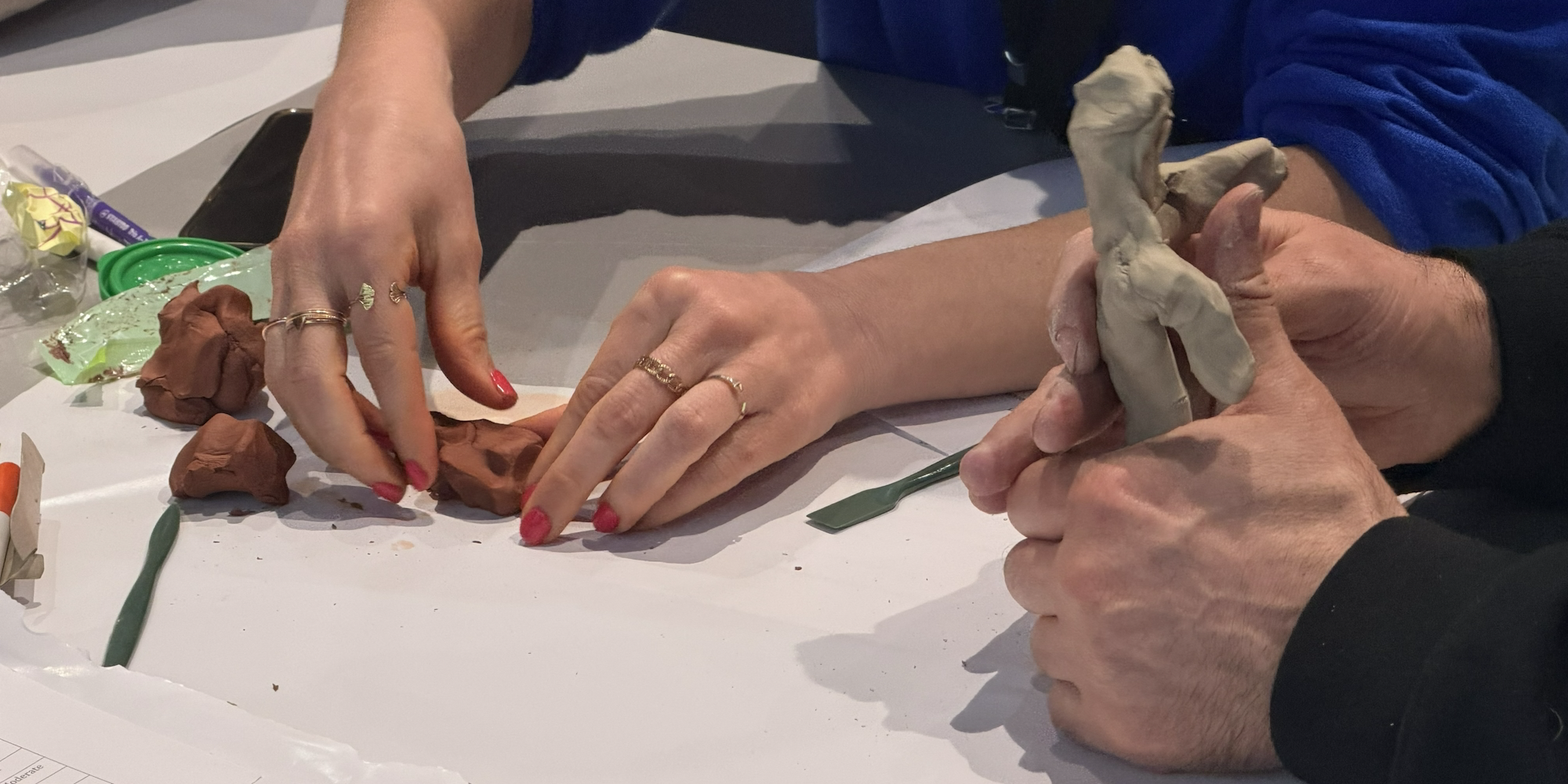
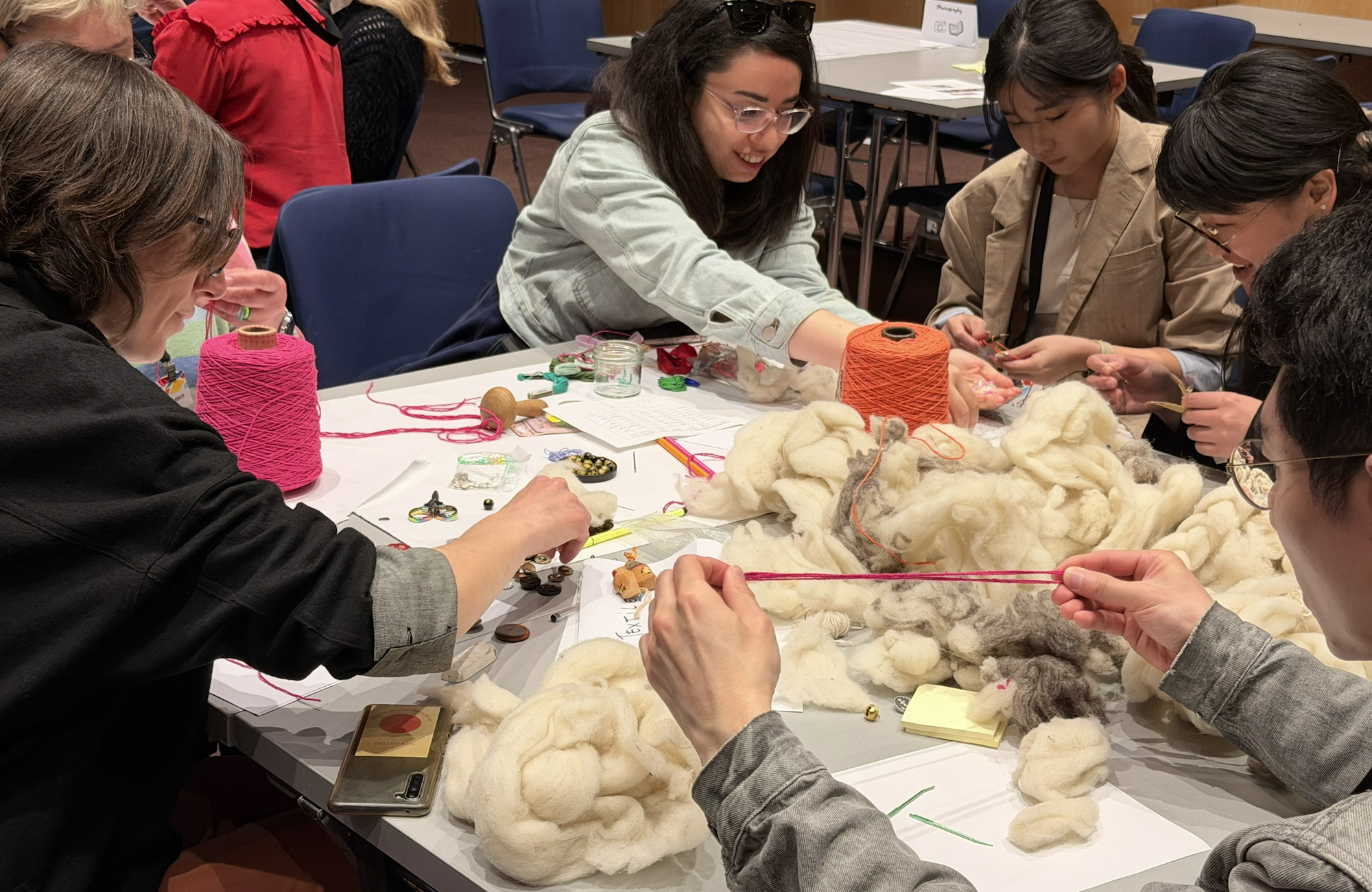
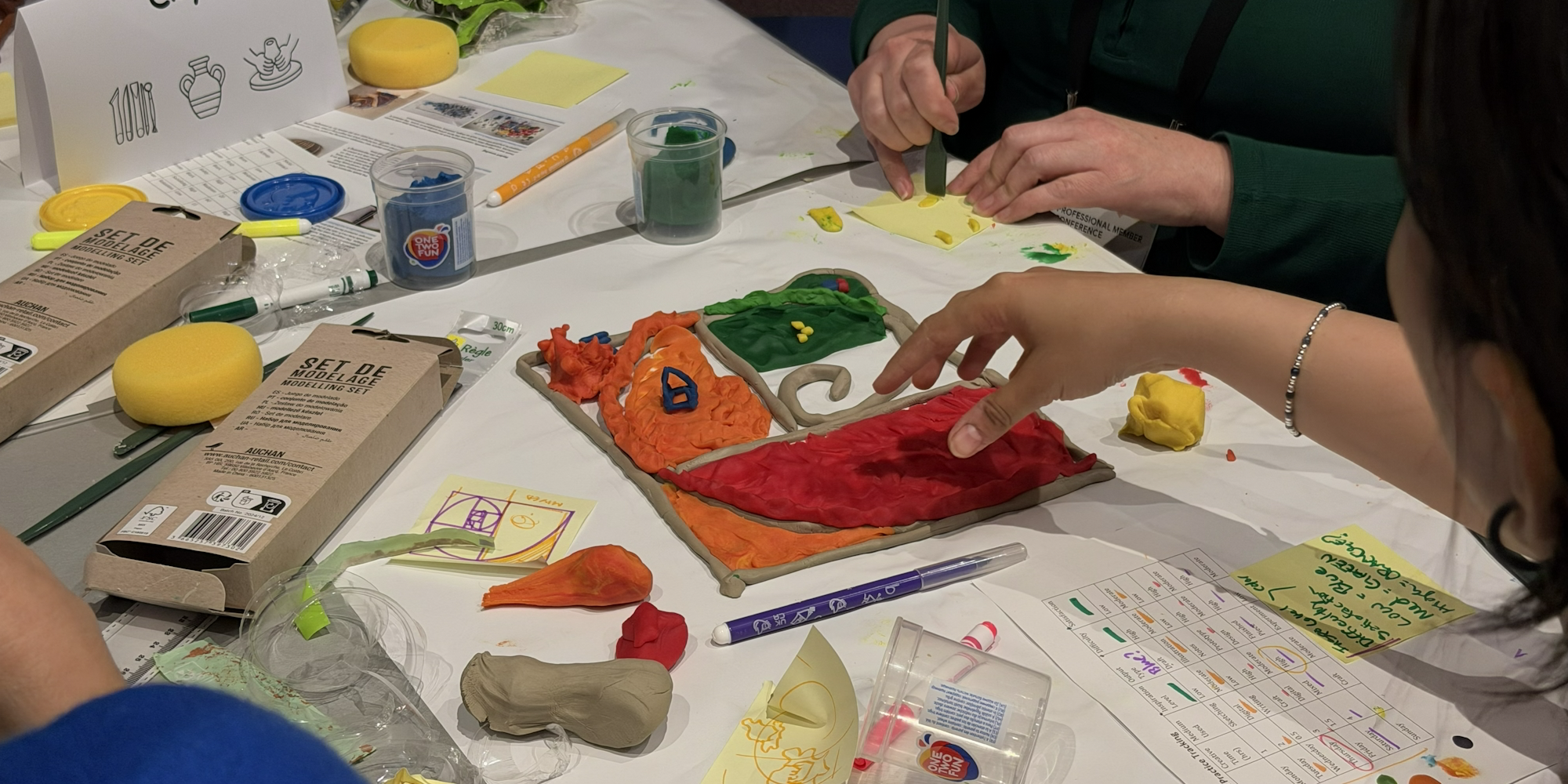
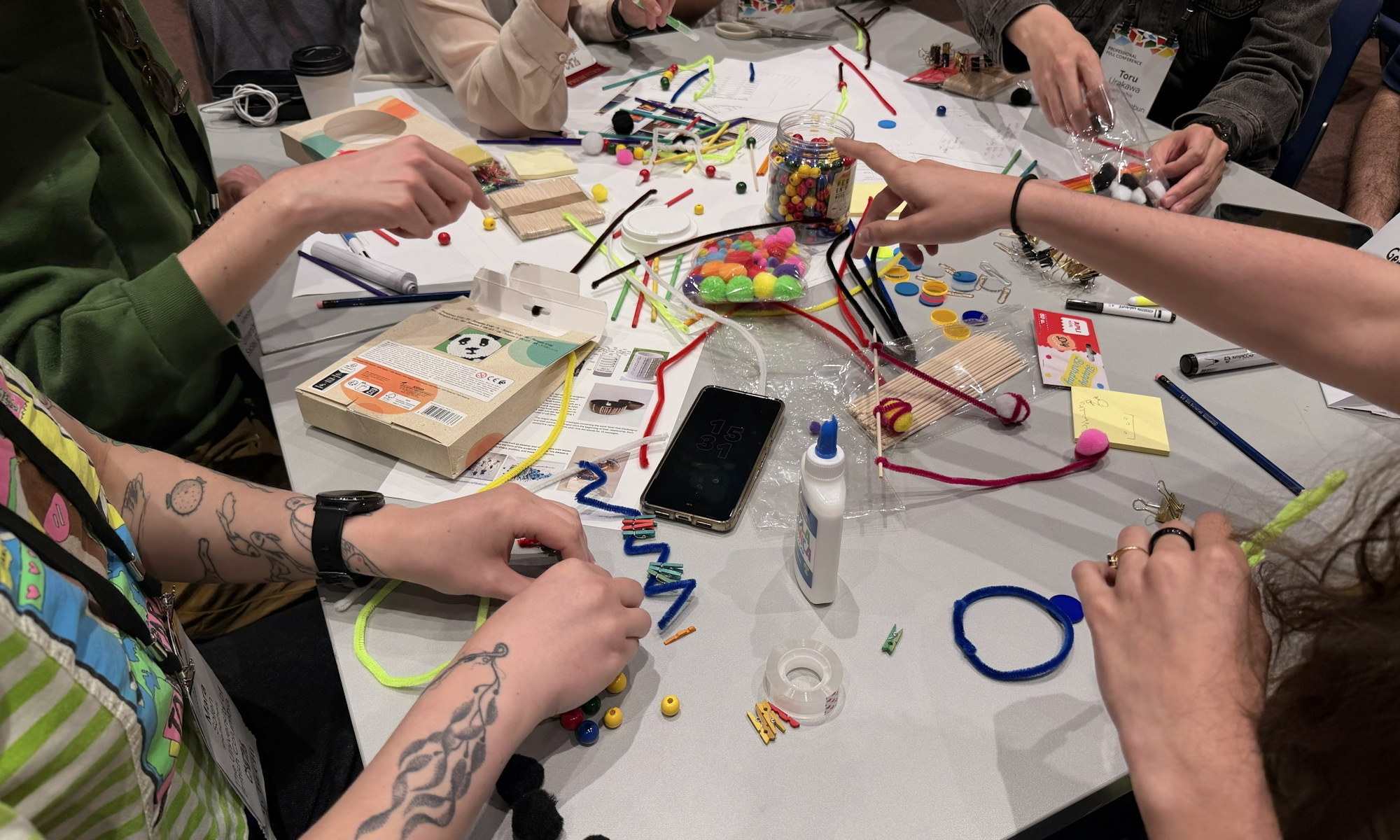
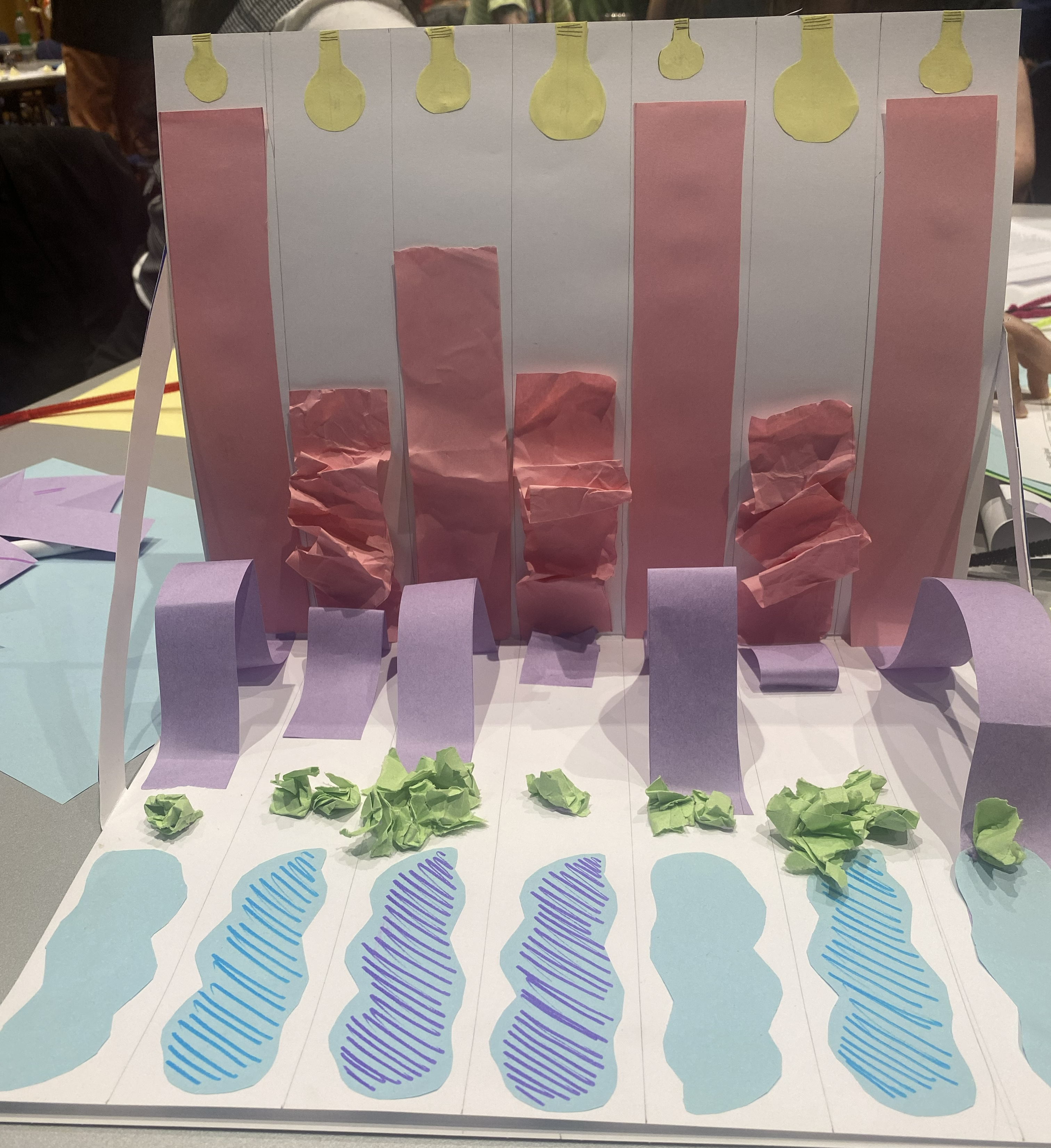
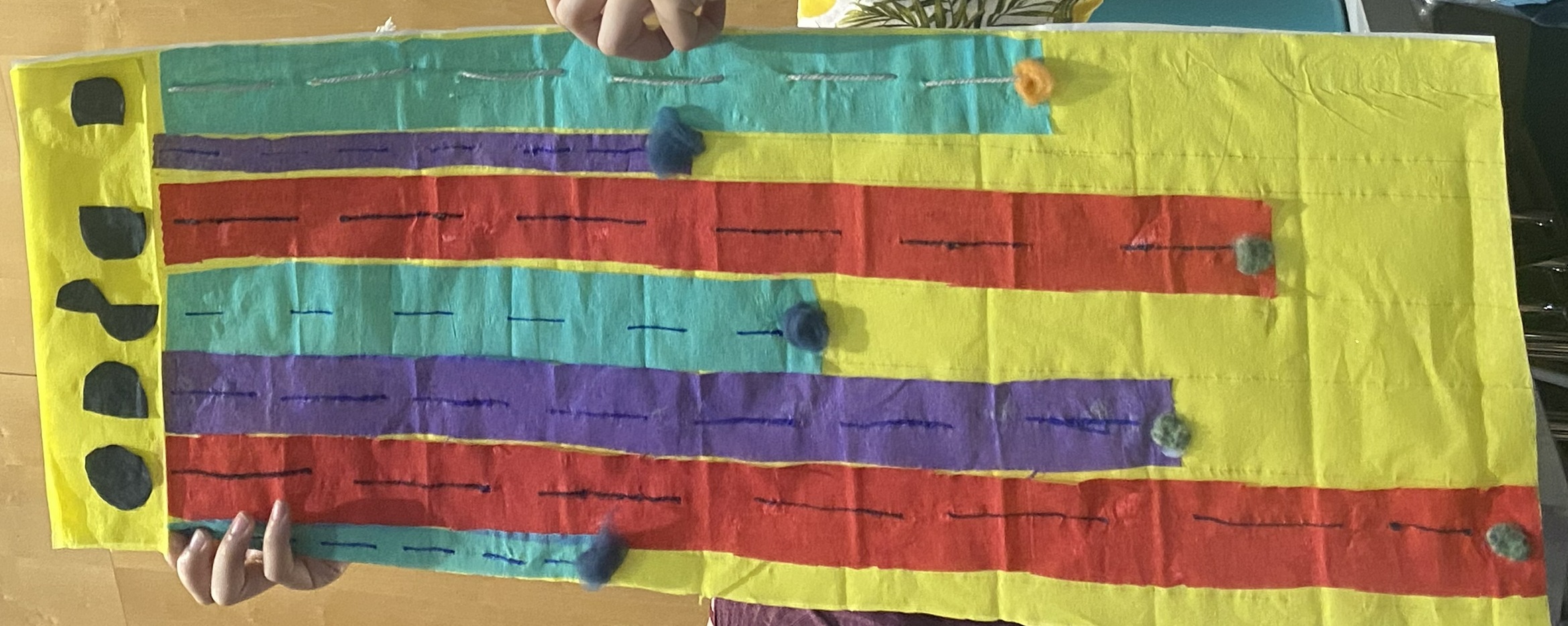
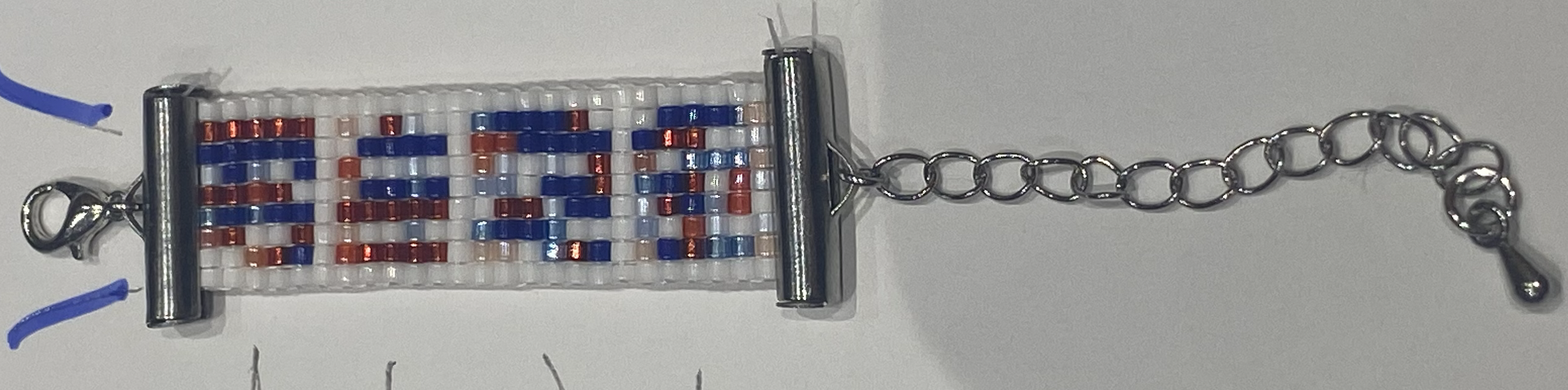
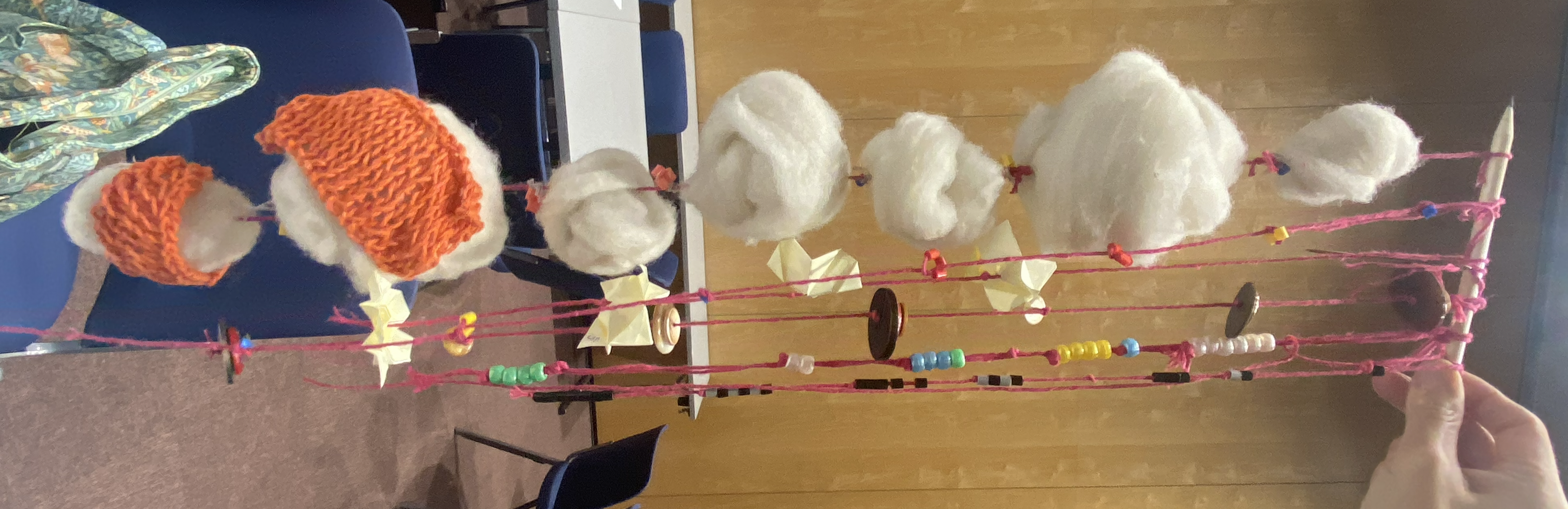
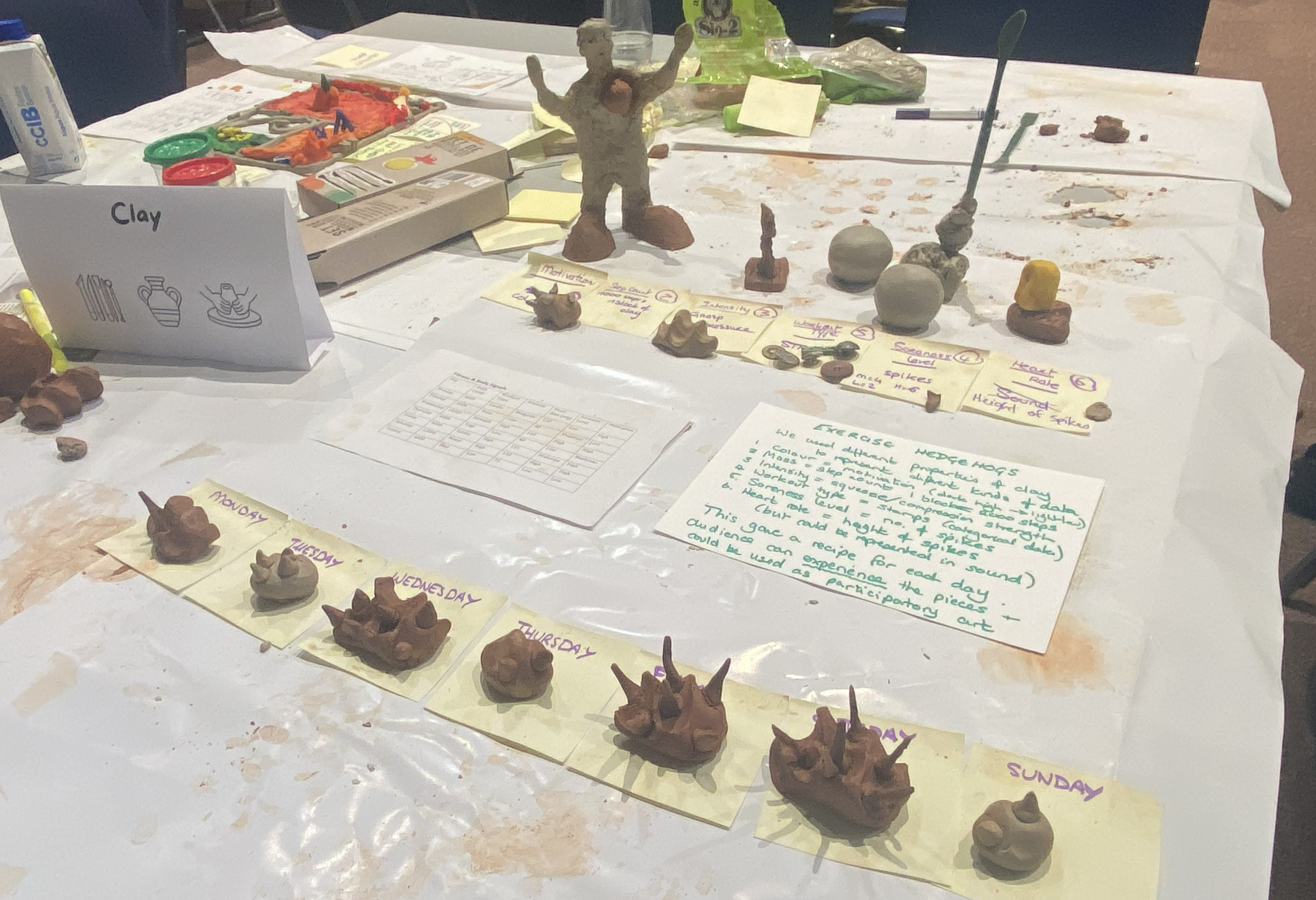
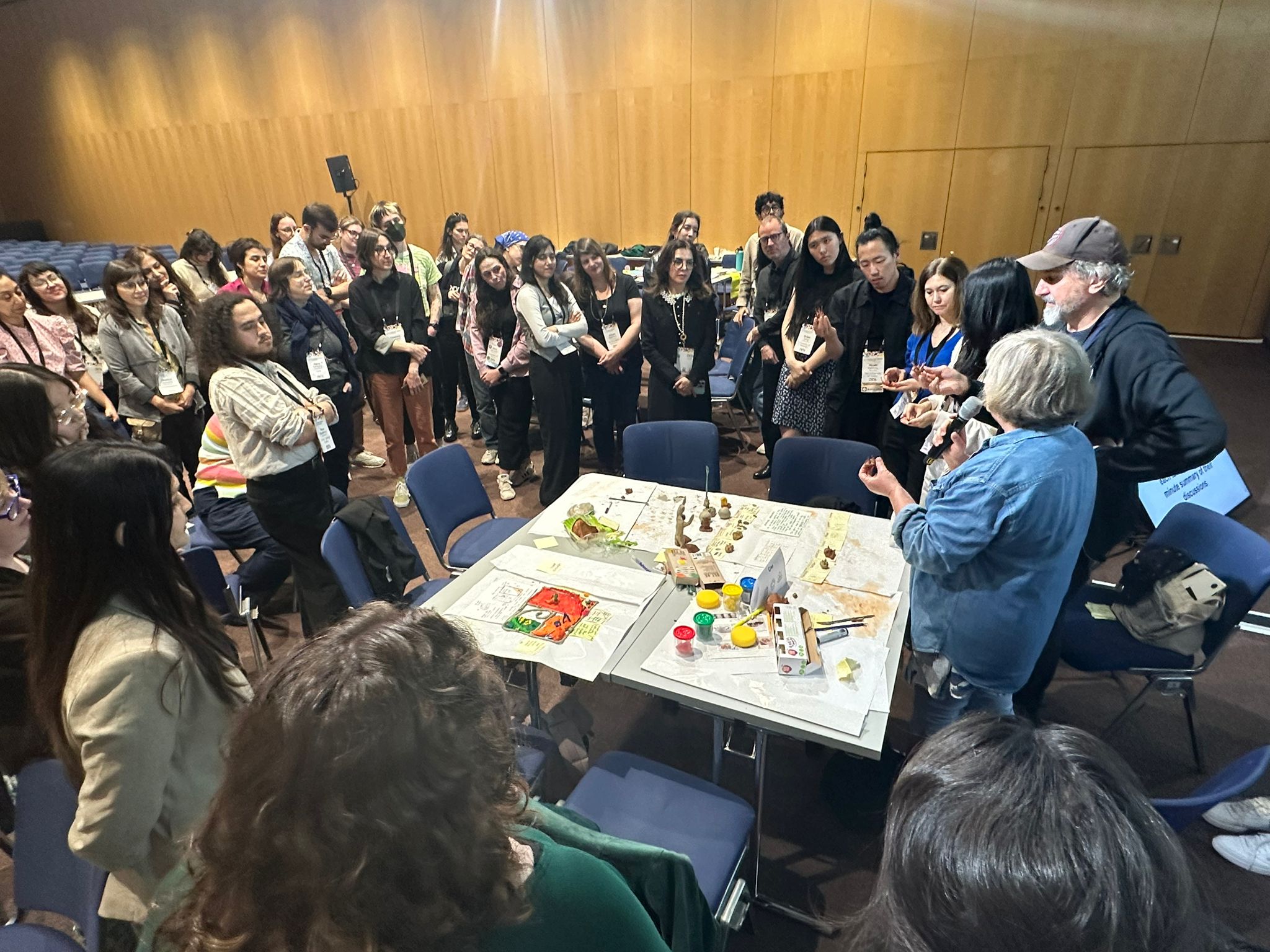
The afternoon was taken up by our workshop on Craft-Based Data Physicalization — making Wednesday my busiest day by far. It was one of the few CHI workshops with an open-door policy, and I have no regrets about that (most accepted submissions are available on the workshop's website). We had a larger crowd than expected, close to 60 before the break and around 45 after. People worked with everything from clay to beads to pipe cleaners to cat figurines to toothpicks, and what emerged were creative, atypical physicalizations. What I saw was 50-ish grown-ups having lots of fun getting their hands dirty, but also engaging in deeply collaborative dynamics that took shape progressively as time flew by. People were smiling and laughing, so I'd say we got the job done. Bahare deserves most of the credit. I was just here for the ride.
Thursday
Thursday was my second-busiest day, though it started far from the conference center. I woke up early to ride north and meet Miguel near the hills for what has become our customary conference-running-meeting. We climbed up (almost in time) to see the sun rise over Barcelona, attempting to talk about research projects between deep breaths. Back to the hotel, kiss good morning my family, shower, kiss goodbye my family, back on the bike, and into the Sports Technologies session.
In the afternoon I joined the workshop on Augmented Reality On-the-Move, where we had a paper on immersive visualizations for running. More good conversations, more people doing adjacent work across HCI, sports, XR, and visualization. I'm fairly confident some new collaborations will come out of it — which is, in my view, the main point of going to a conference, rather than sitting through presentations or patting each other's back at fancy dinners.
Friday
Friday closed the week with a session on Movement-based Games, Sports, and Coaching. After their presentation of the paper on scoring mechanics for encouraging technique adoption in sport training, I spent some time chatting with Ian and Scott. Technique adoption is a genuinely hard problem, and I remain convinced visualization has a role to play there. I want more of this.
Friday closed with a capstone plenary by Tamar Makin and Dani Clode from the Plasticity Lab on impressive collaborative research relevant to HCI, though I felt the talk itself didn't quite connect with the CHI community. The closing session was forgettable — standard conference wrap-up style. Next year's CHI will be in Pittsburgh. I'm unlikely to be there.
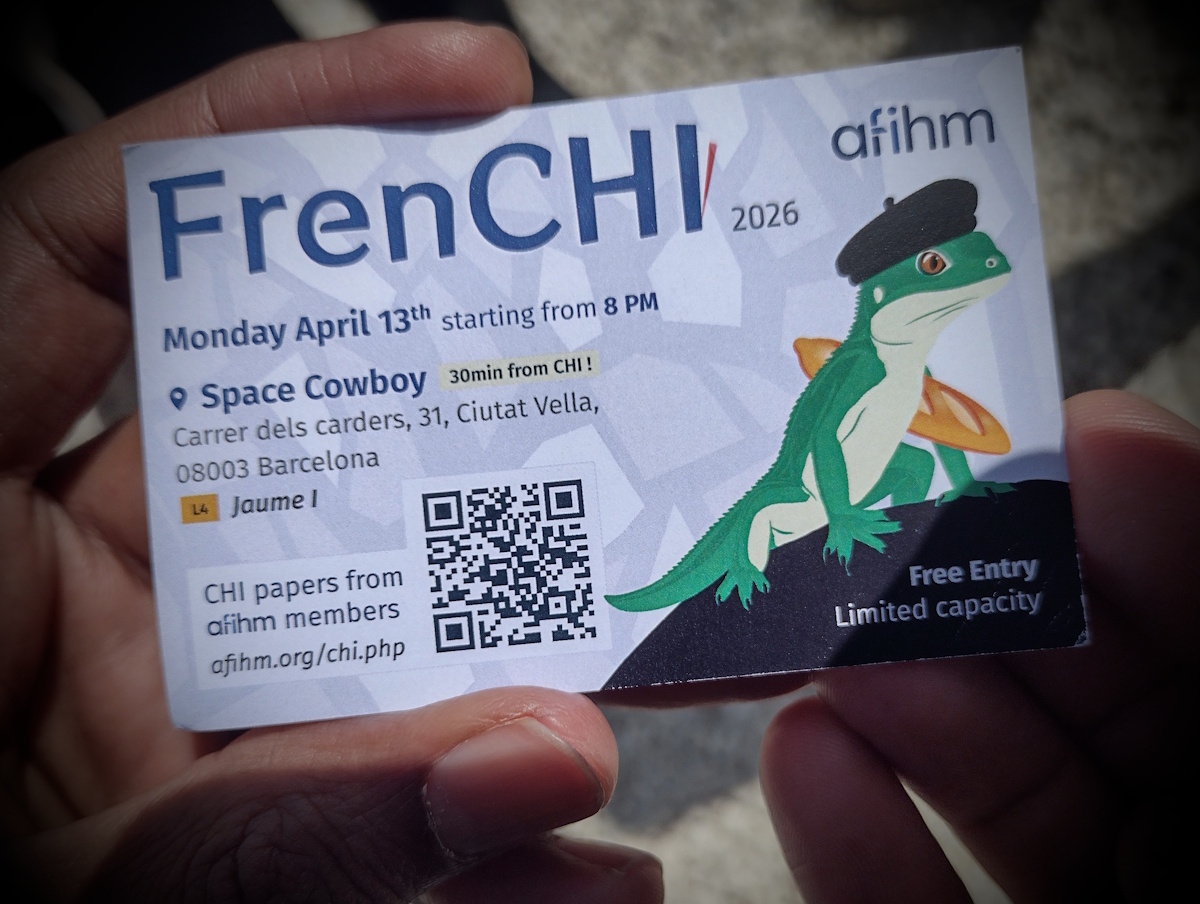
The coveted ticket that makes you feel so special
Some pics from the craft + physicalization workshop
Epilogue
When I don't spend time with my family or work, I run – usually in nature. It's never easy during conferences, but I still managed to sneak in a few runs in and near Barcelona.
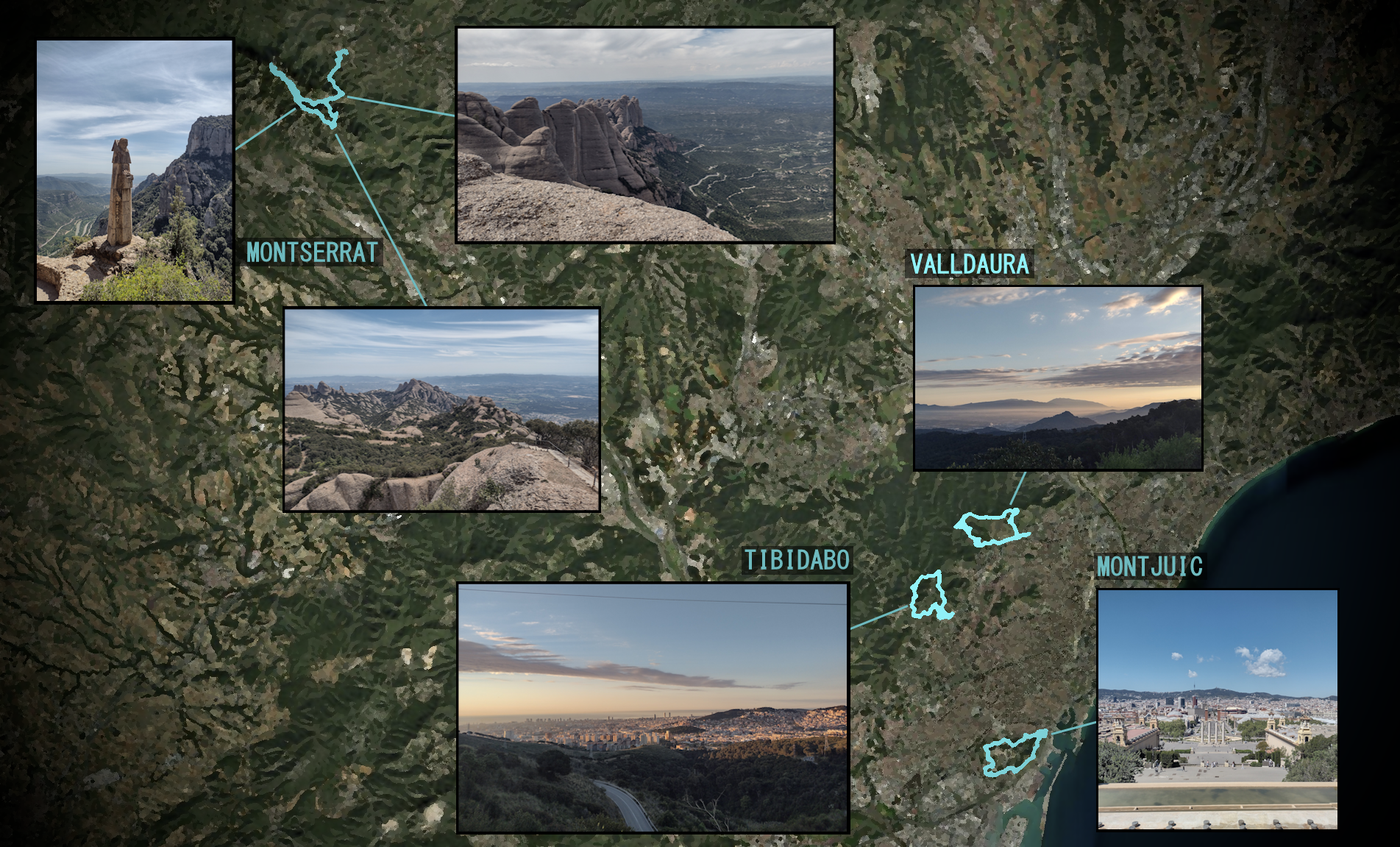
I successfully fit in around 50 km of running during that week - through the crowds of Montjuïc, the quiet trails around Tibidabo, sunrise over Barcelona from Valldaura, and the breathtaking rock formations of Montserrat on our way back from Barcelona.
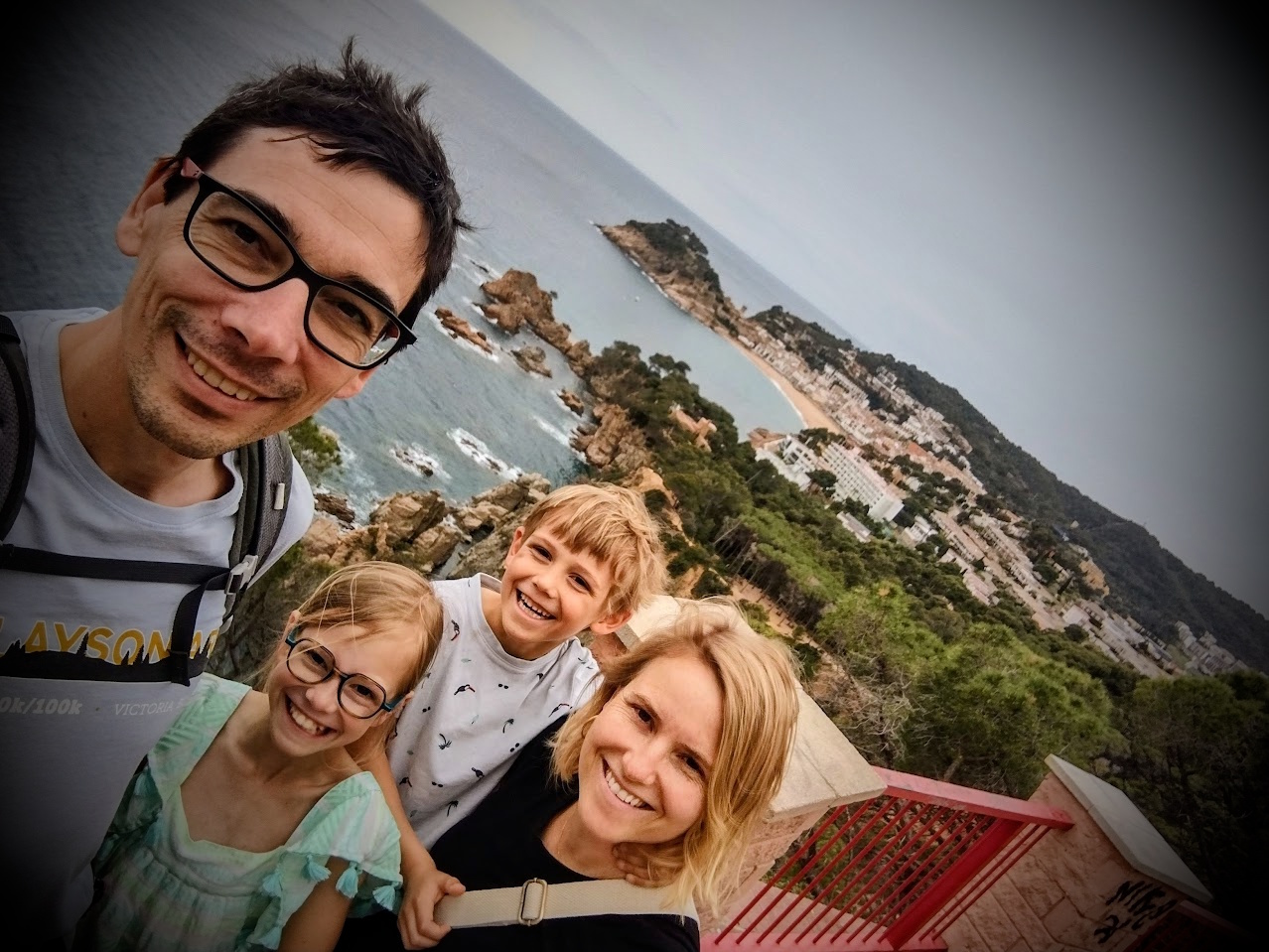
We could even squeeze in a short hike in Tossa del Mar on the way down there.
That was one of the best — if not the best — CHI I attended. I don't see all the stars aligning like this again anytime soon, if they ever do. But I'm glad it changed my mind on the conference and its community.